Heat Pump washer/dryer at CES

Heat pump demo at CES 2009

Heat pump demo at CES 2009

When air is compressed it gets hot. When it expands, it cools off. Add some kind of fan to circulate the hot and cold air and you have a heat pump—the technology behind refrigerators, air conditioners, home heating systems for some environments (where there is a considerable difference between the ambient temperature in two different places, e.g. the ground and the air)…. and now, washer/dryers.

Panasonic demonstrated this unit at the 2009 CES. I took a movie of it which is here, on YouTube. (sorry for all the noise… it’s CES!) Unfortunately, there are no plans to import this device to the US because the capacity is too small.

CES 2009: down, but not out

Advance registrations at the Consumer Electronics Show were down 5-7%, but the real question, since most industry folks get in free, was how many would actually show up. Good news. Floor traffic is fine and it’s too packed to move in many places, just like regular years.

Environmentally-sensitive kelp speakers, from Panasonic

Environmentally-sensitive kelp speakers, from Panasonic

Most interesting for me from a marketing perspective were the home monitoring systems, including one from client Schlage locks. Via a low-power wireless mesh network you can lock and unlock your doors, turn lights on and off, and regulate your home entertainment system. With an extra subscription you can log on remotely and see if your kids got home on time (because each family member has their own code to unlock the front door), if you remembered to close the garage door, or preheat the oven. And because every product has to have an environmental angle this year, these systems also have energy components that can dim your lights when you leave the room or turn off the power if you forget.

A few other items of interest:

  • Finally, a flat screen TV that actually is as thin as a sheet of glass, from LG.
  • 3D televisions, complete with 3D goggles, were everywhere. My favorite was LG again, maybe because they had the best movie playing (a scary Korean animation about a kid, a robot, and a nuclear winter).
  • Minoru, The world’s first 3D webcam and Sergio iSpin, a sophisticated DJ remix station for your iPod, both not prototypes but selling right now for under $100 on Amazon.

    Minoru, the 3d webcam

    Minoru, the 3d webcam

  • Beatbot, a puffy robot containing a webcam which can be made to react to stimuli. This is used not for play but as therapy for children; they can interact with the robot directly and make it do things and the webcam can watch what they are doing and track improvements over time.

And this year’s favorite tcotchke: from Cirago, a solar powered LED keychain!

Trade Show Tactics

We’re coming up on January, which has become my big trade show month since the demise of Comdex. I’ll go to the Consumer Electronics Show first, followed by a quick stop at Macworld, and then the Fancy Food Show at the end of the month. What am I looking for, other than schwag and free food?

First, I want to see how companies I work with—or their competitors—get the attention of the audience through elevator pitches or booth design. And second, I want to watch other show-goers who may well be my audience at some point to see what questions they ask and what “hot buttons” cause their faces to light up. It’s also nice to put a face with abstract stats so I can have a mental image of my reader, next time I write to Dear IT Manager or whatever.

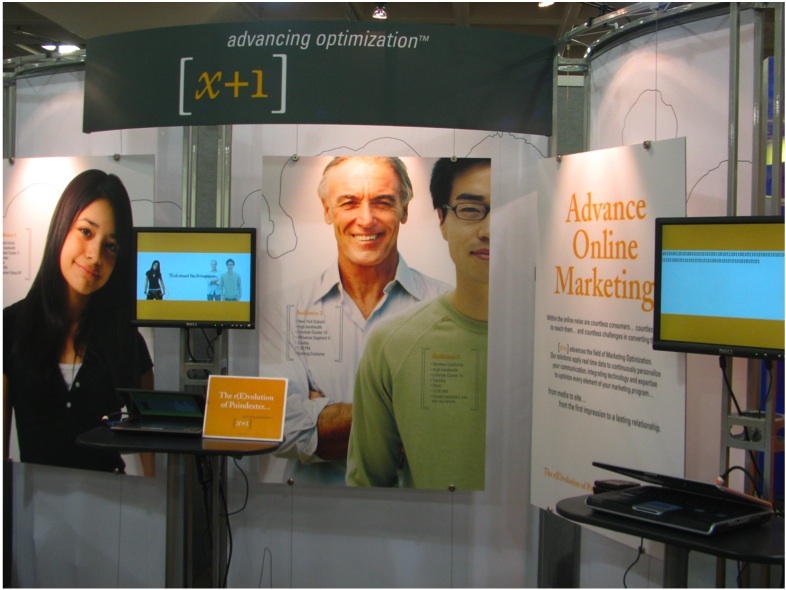
In my copywriting class we talk a little about trade show booth design for smaller companies—something that increasingly seems to be the responsibility of the marketing folks who are my students. It’s not easy to create a visual “home” out of nothing that can be erected and disassembled quickly. One thing I’ve noticed is that faces help—big photos of people who look like your users, making eye contact with the show traffic. Not enough companies do this so it’s very easy to make yourself stand out.

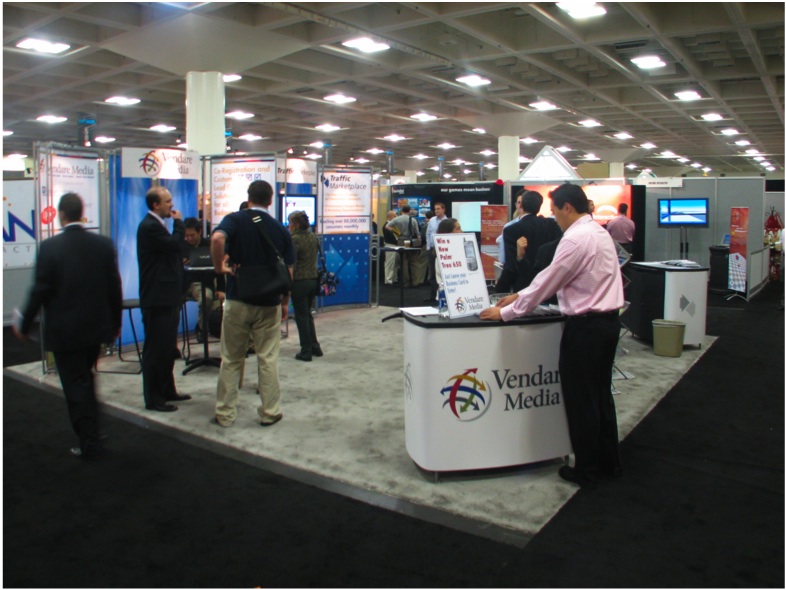
Also, too little attention is paid to booth traffic patterns. If you stand behind a high counter, you’re creating the metaphor of a store checkout—people will not approach unless they’re already committed to doing business, which eliminates most potential booth visitors. If you put up registration kiosks at the outside corners, or entry points framed by signs, you’ve created a boundary that may keep people out.

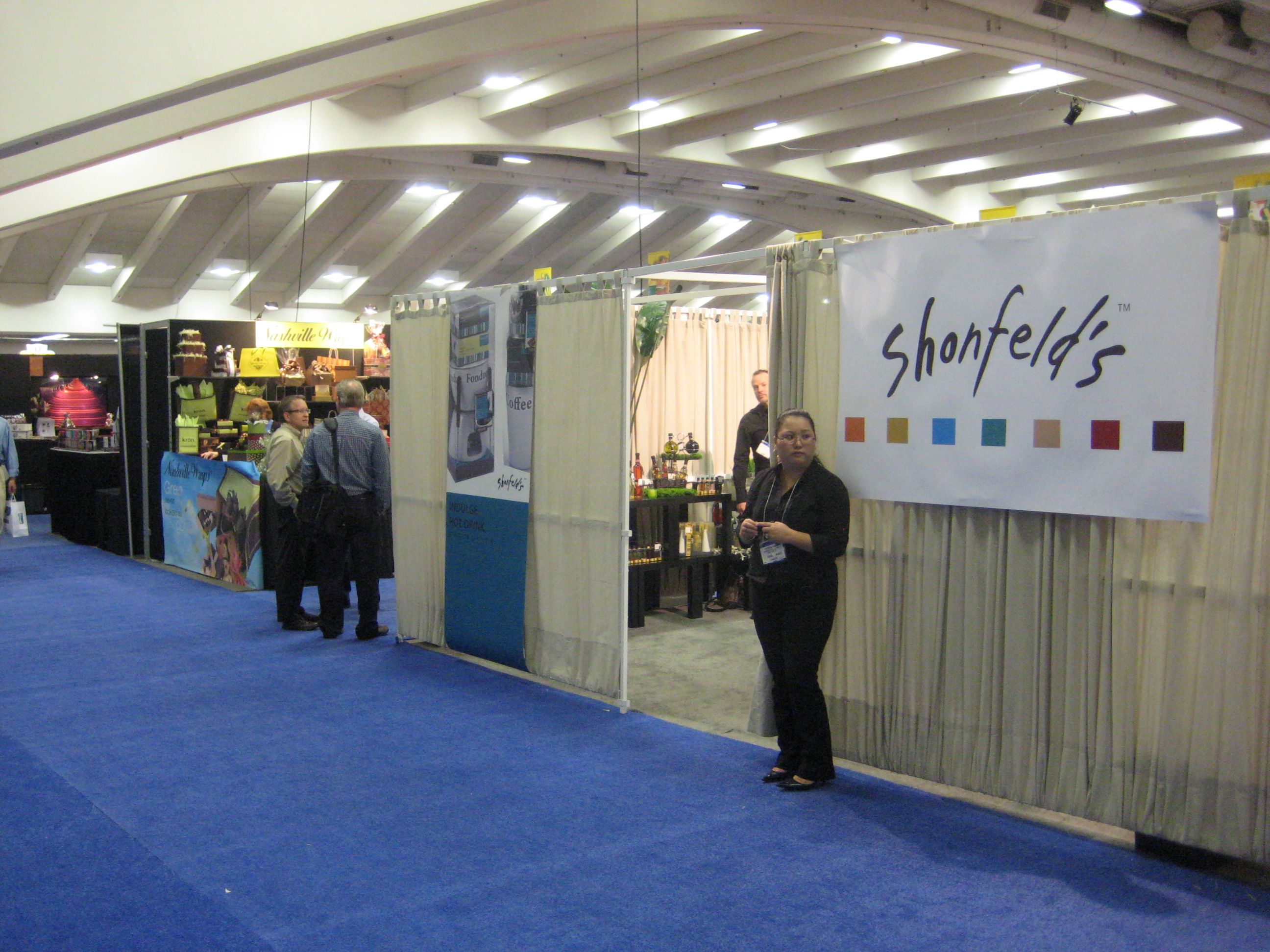
As a show floor troller, I tend to be wary of a big and empty booth—I assume that they don’t have much to offer and that if I go in I’m guaranteed to be hit with a sales pitch. But I find a booth with higher traffic irresistible, because I want to see what the buzz is all about. You can do this with good visual design and a seamless traffic pattern. Oh, and free samples of artisanal cheese will help.