January 9th, 2010 — Marketing, Tech
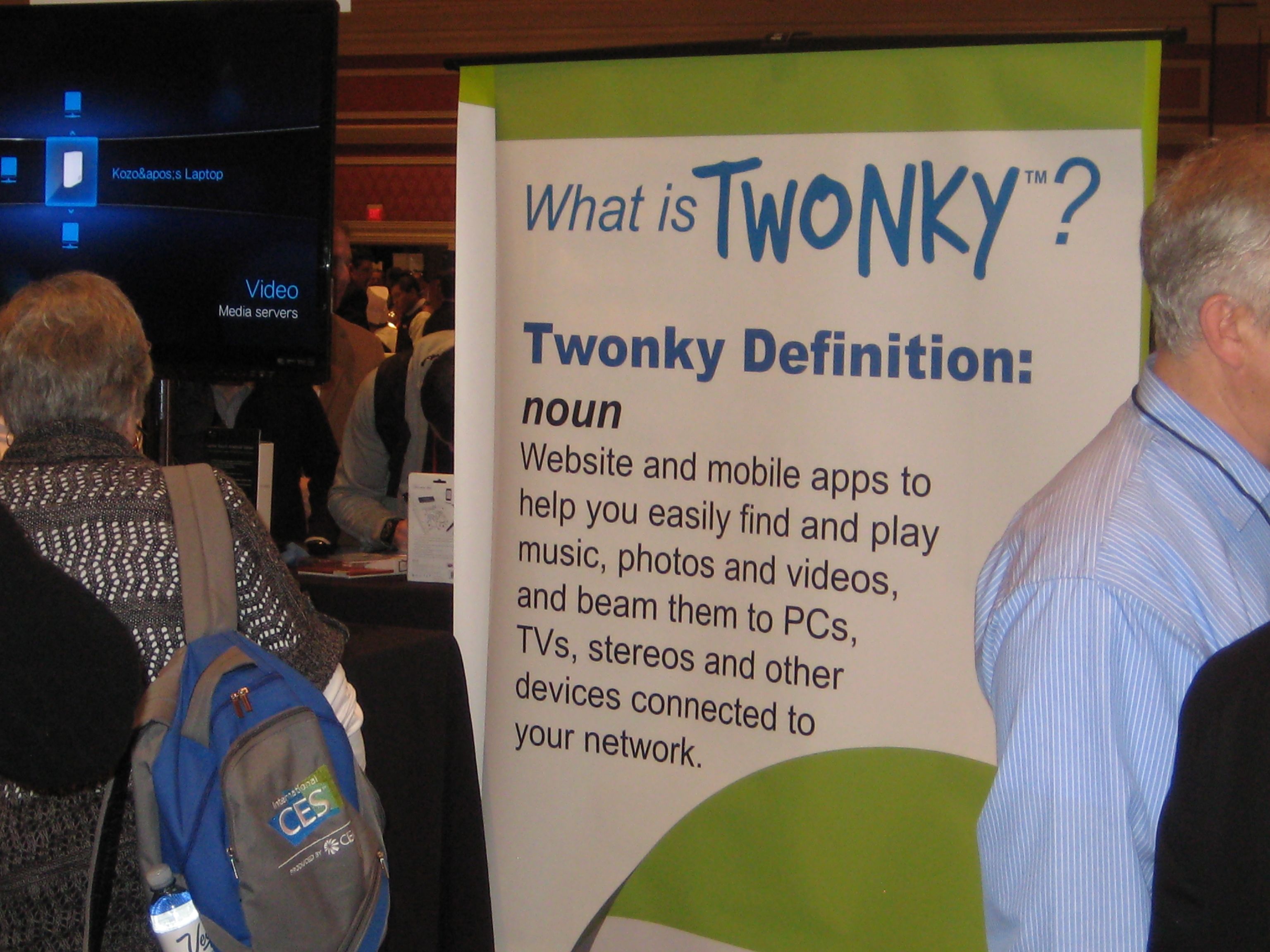
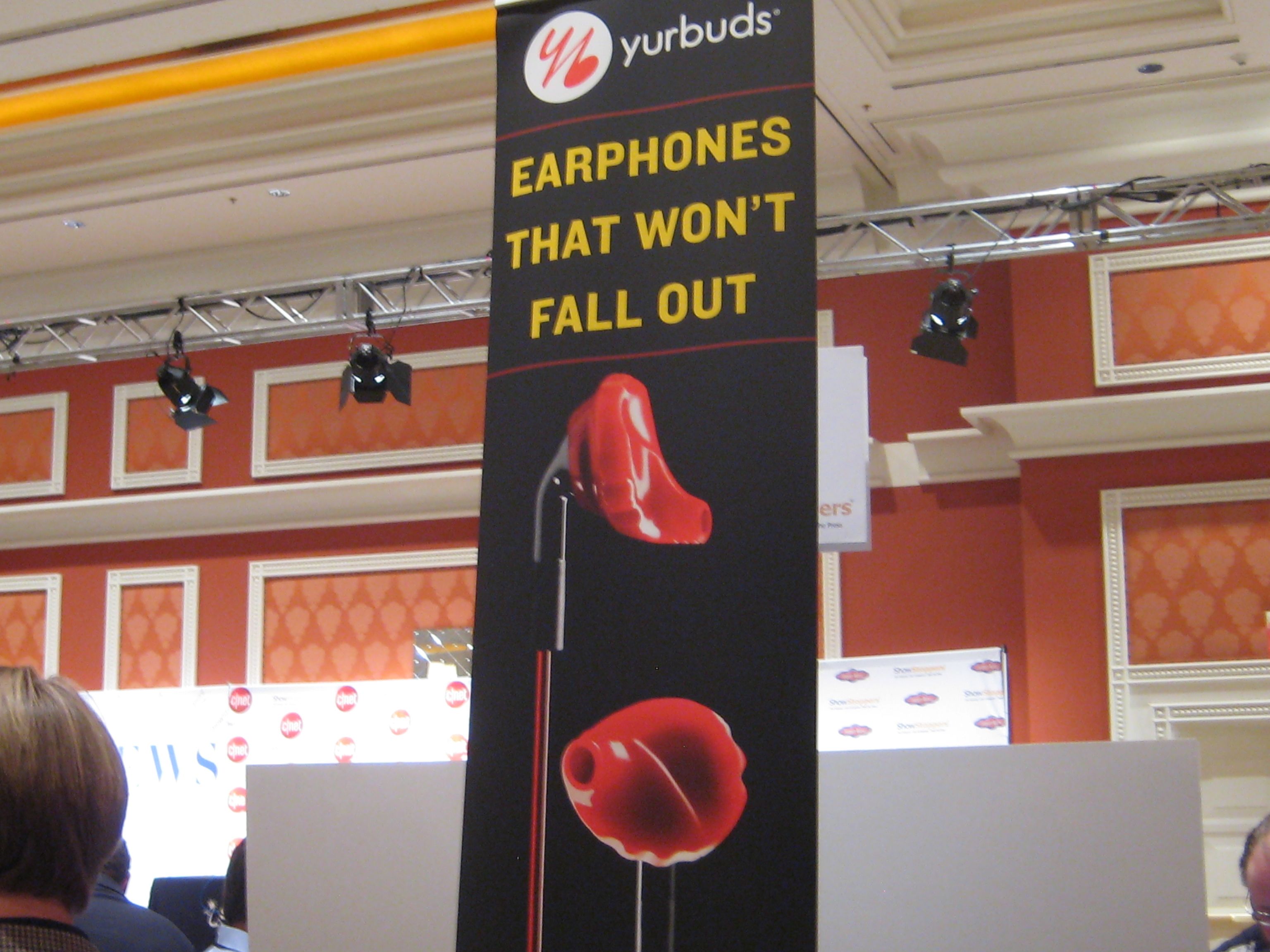
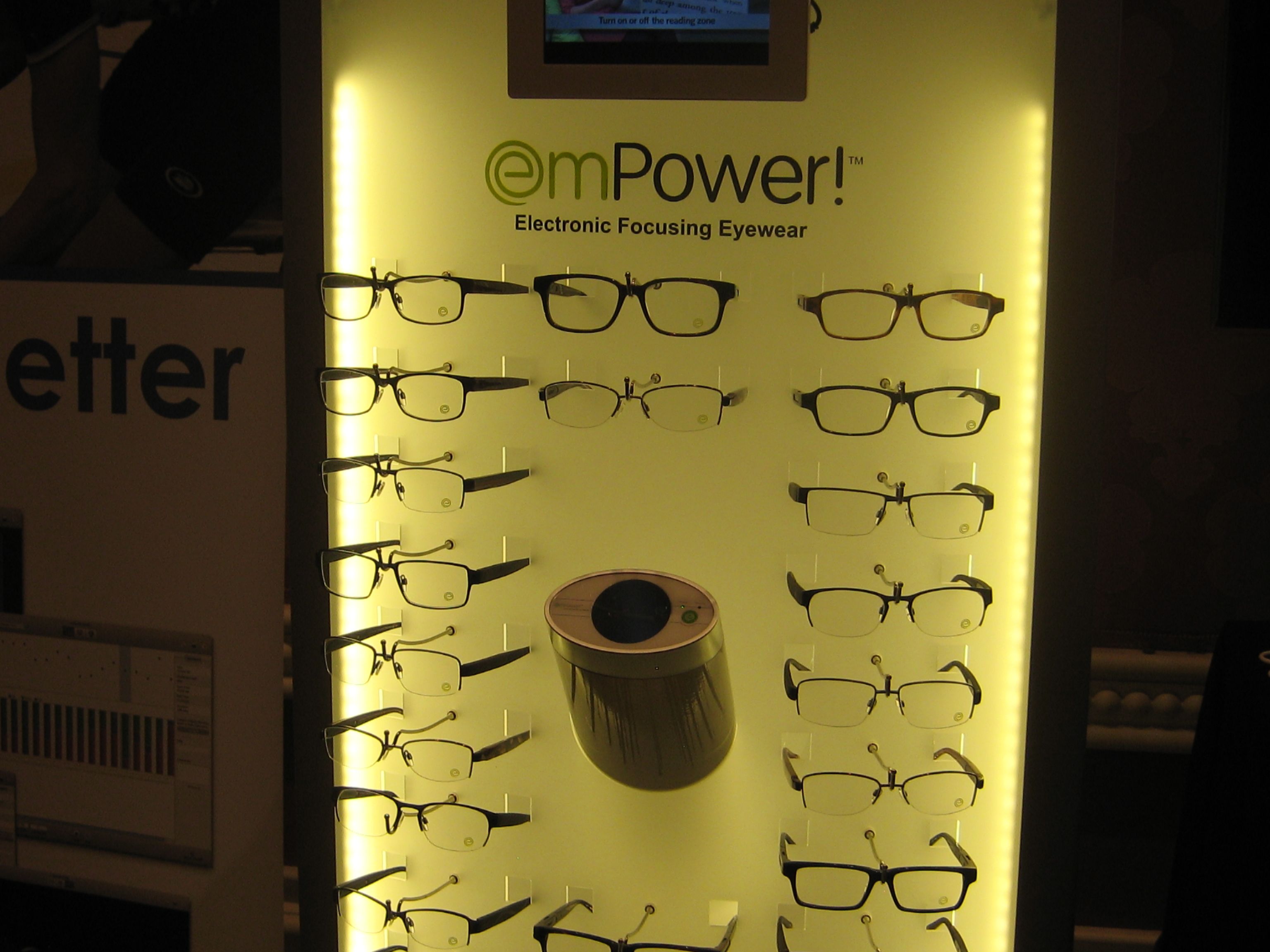
Just finished my first day at the 2010 Consumer Electronics Show. The aisles are packed, at times so much so you can’t get through. But there are no exhibits in the huge Sands center this year, several of the areas in the back of the South Hall are blocked off, and one of the ballrooms usually used for the Hilton International pavilions is dark. In the main hall, OEM no-names share the prime spots with the likes of LG and Panasonic. My guess is that exhibitors panicked and stayed away while significantly more attendees are here than last year, signaling their intent to lift us out of our gloom.
According to show sponsor CEA, consumer electronics sales were off 7.8% in 2009 yet with higher volume led by bargain hunters. Sales for 2010 are projected to be up “slightly” from this terrible level. So it was interesting to see what attracted the most attention at the show.
Most popular trend that is going nowhere: 3D TV. Everybody is standing in lines to get into the theater rooms and see it but my prediction is, this is like the hot girl you’re never going to bring home to meet mom. Once the 3D glasses get stepped on or lost in the couch cushions, the party is over. (One vendor, TCL, shows a Fresnel lens type 3D where the picture is slightly different as you sift your vision, and doesn’t require glasses, but it doesn’t really have the drama of the polarized glasses kind.)
Bad news for the 3D TV folks: virtually no traffic in the zone promoting mobile TV, a technology that is designed to provide high quality reception in a moving vehicle. If you don’t want your kids to watch live TV in the car, my prediction is you won’t want to watch 3D at home either. There’s a limit to how much fun you can have.

Entourage Edge gives you the best of both worlds. It’s an e-reader AND a tablet computer.
Attracting a lot of crowds: e-readers. Diverse interpretations and executions of what Kindle left out, many with added value content such as newspaper subscriptions, complete with graphics, delivered along with your e-books. There was prediction Apple would show its new tablet at the show, but I haven’t seen it. (SF pundits mention Moscone Center is mysteriously unbooked for several days in late January, suggesting an Apple stealth event coming then.)
I saw several specific technologies of interest. Will report on some of these tomorrow.
January 7th, 2010 — Marketing, Tech
This is my first year as an “official” blogger at CES (why the quotes, dude?). I’m already a day late because many of the press events are held on Thursday so they can get coverage before the throngs arrive. Definitely sorry to miss Lady Gaga at the Monster booth. Wonder if I’ll run into her later tonight when I arrive, maybe at the Showstoppers Expo?
The first time I attended this show was before many of my readers were born, probably, back in the 80s. I was an account exec at an agency representing The Federated Group, a home entertainment chain that has since gone to its reward. Accommodations were incredibly hard to find pre-internet efficiency. I was put up at the Showboat, somewhere downtown and far from the action. It was all demos of Betamax and Quadraphonic. I did not have fun.
Today the CES incorporates many of the vendors who used to be at COMDEX and they’re primarily my focus in attending. As a marketer, I like to hang back in demos and watch my audience to see what questions they have and what bullet points make their eyes light up (or become less glazed over). I also like to look for new or interesting technology which often comes not from startups (it’s very expensive to exhibit here) but from backwaters divisions of major companies—Panasonic’s heat pump washer/dryer, covered last year, being a good example.
And, as a marketer I like to look at the way all these companies are marketing themselves. If you’re into home entertainment, how do you establish through your booth display that your product is “entertaining”? If it’s a new technology, how do you show in a microsecond what it does? Now that I’m on the press list I get to see lots of flackery, good and bad, in the press releases and invites sent out. Most intriguing so far is Gracenote’s display at the Showstoppers tonight, which promises only “surprises”. Hope I am. More later.
December 31st, 2009 — Everything else, Marketing
I hardly ever use this blog to promote my own services, so please indulge me. I want to make an analogy to Southwest Airlines, whose CEO David Kelly explained he gained market share in a dreadful economy by doing nothing. Other airlines started charging for checked bags, Southwest didn’t. “Bags Fly Free” was news.
The commercial side of Otisregrets can be found in the tabs at the top of the page. Though I’m a copywriter, I came out of a Master of Fine Arts program at UCLA Film School. I can’t help thinking in terms of stage management. How will the recipient interact with the elements of the direct mail package? What will the reader see “above the fold” on a web page that keeps them reading?
From the beginning, each of my copywriting deliverables has come with guidance on how to execute it graphically. Sometimes this means detailed design commentary within the copy deck; sometimes it’s working with an in-place designer; every now and then I do an old-school “copywriter’s rough”.
I don’t see other writers doing this as much these days, when we all are re-inventing ourselves to stay viable. Maybe it’s my own “Bags Fly Free” story. Check it out.
December 23rd, 2009 — Copywriting 101, Everything else, Marketing
In my town lives a master carpenter named Chris. He donates his time to serve on the town historical preservation board, and he donated his time last fall to supervise a bunch of Saturday amateurs who volunteered to help rebuild a dilapidated but beloved local building. It was in this context that Chris provided a sweet example of a carpenter’s jig.
A jig is a made up structure which holds your work in place while you are performing a carpenter’s task such as sawing, drilling or glueing. A jig is handy if you are doing a number of repetitious operations (for example, drilling a row of holes at exactly the same position in a cabinet so you can hang a perfectly level shelf) but can also be used for a one-time operation if you don’t trust your ability to control an unpredictable process when wood meets a powerful force.
Making a jig is one delineator between a carpenter who cares about their work and a hobbyist tacking boards together. It’s the physical embodiment of laying the groundwork which a good marketer is going to do as well: define your problem, determine how you are going to approach it, then be clear in your mind about your plan of attack so you don’t get distracted and veer off course during the executional phase. Good copywriters do this without even thinking about it; less-good copywriters just hammer away.
But back to Chris’ jig. The job given to me and a couple of other guys was to hang siding along a 20 foot run. As he described the project Chris asked me, “do you want a jig?” That was music to my ears. Each row of siding needs to be perfectly level and it needs to overlap the previous row at exactly the same measure from the bottom. Trying to eyeball this with a long floppy board would create something ugly. So Chris made a jig. He took a 10” length of 2×4, ripped it down the middle to the 6” mark, then turned it 90 degrees and made a crosscut that met the first one to create a piece that looked like an L if you held it sideways. And then he made another jig exactly the same as the first one. If each guy takes a jig and fits in the shelf of the L under the previous row of siding, then rests the next piece on the top of the L, the work is in perfect position to nail into place.
Now it may occur to you there would be an easier way to do exactly the same thing. Just get two pieces of wood (you could even use scraps from the siding) then fasten them together offset at 6” to produce the two shelves you need to hold the work. But Chris did it the hard way because it gives him pleasure to make something that works well. Not a bad role model for copywriters.
December 21st, 2009 — Copywriting 101, Marketing, Words and writing
It is hard to avoid sexual analogies with the “close” but I will try. This is the part where the sale wraps up and the salesperson gets the act of commitment—a satisfying reward for handling the previous steps in a methodical and unhurried manner. The copywriting counterpart should be just as satisfying because this is where you get your reader to respond to your call to action; if you have a good and smart client, the higher percentage of people who respond, the more you will get paid.
Because it is so important and satisfying, salespeople like to linger a bit on the close and add a bit of art to it. There is lots of ink on best/proven/classic closing techniques. A good salesperson will first make a trial close in which they soften up the prospect to get them to agree to a small point before proceeding to the actual sale. (Example: “Sounds like the hatchback is a better fit for your family’s needs, am I right?”) Then they might use the assumptive close in which they act as if the sale has already been consummated and query on a subsequent point (“Will you be using a credit card for this?”) or the alternative close which also makes an assumption and gives the reader a subsequent choice (“Now, do you want that in red or black?”)
Roy Chitwood, whom I’ve quoted throughout this series, offers The Guaranteed Close: “If we can (reprise something the prospect said was important) then can you think of any reason we shouldn’t (consummate the agreement)?” E.g. “If we can get those red slipcovers you liked, can you think of any reason we shouldn’t get the paperwork started?” The beauty part is that the salesperson gets the sale by making the prospect say “no”.
Good direct response copywriters will close the sale in a manner that’s quite different but leads to the same outcome. They will sprinkle their emails, web pages or letters with repeated brief calls to action because you never know when you’ve provided the right amount of sell for some readers to make a commitment. Then, for those who have stuck with you all the way to the end (this applies mainly to classic long-form direct mail letters), reward them with a wind-up in which you:
- Spell out in detail all the benefits that are waiting for the prospect, accompanied by a description of the response options available (today it’s usually click the link or call).
- Couple this with your guarantee that proves there is absolutely no reason NOT to say yes.
- Include a limited time offer if you have one, or penalty for NOT responding. (Only 25 attendees can be accommodated to insure personal attention to each student! This guide is available in very limited quantities and when they’re gone, they’re gone!)
Then you’re done… as is this 7-part series, in which we have mused upon how good copywriting follows many of the same formulas as face to face selling. If you’ve joined us late, please go back and start from the beginning. Thanks for reading!
December 12th, 2009 — Copywriting 101, Marketing, Words and writing
The general public has an image of “pushy salespeople” who cajole or badger them into buying something they don’t want or need. But good salespeople don’t actually do this. Instead, after they have presented the benefits of their product or service they will tease out any objections in the prospect’s mind and then respond to those before closing the sale.
Objections, also known as FUD (fears, uncertainties and doubts), are perceived reasons not to make a purchase that is otherwise attractive. By making an objection, the prospect is giving the salesperson a clue about something important to them. And by completely and correctly answering the objection, the salesperson can actually increase the prospect’s commitment level.
For example, if the prospect says it’s too expensive the salesperson can point out how it will actually save money, how not having it is costing them money, how the price is likely to be higher tomorrow. If they say they want to shop around the salesperson will ask what they’re looking for from the competition and then prove how this product solves the problem in the best possible way.
So how does a copywriter answer objections, when you don’t have the reader in front of you to gauge their reaction to your written sales pitch? One answer is research—which can come from talking to a sales rep or product manager, reading up on the industry you’re selling to, or ideally from information in a good creative brief. You’re looking for big objections—the top one or two reasons buyers don’t buy—because that’s all you have time to respond to in your copy without getting off track.
A good example is the control direct mail I wrote for Geneva, a merger and acquisition consultant which wants to get business owners to attend a free seminar on how to evaluate their business. (The letter from this package is available on my website.) The #1 objection that business owners put forward was that they couldn’t admit to themselves (or to their employees) that they would consider selling the business. So we created a lift note that said just that with a pull quote on the outside: “I’m not about to sell my business… not after all the work I put into it!” And inside they read the story of a peer who felt the same way, but got a fabulous offer for more than he thought the business could possibly be worth. Objection answered.
Also, if you’re selling via direct response, certain objections come with the territory since customers can’t touch and feel the product. Will it work as advertised? What if it’s delivered and I don’t like it when I see it? And the answer is to paint very clear word pictures of how great it will be to use the product so the reader starts to visualize themselves doing just that, successfully, and becomes invested in your pitch. Couple this with a strong, clearly stated no-risk guarantee and you’re on your way.
Next time: we’ll conclude this series with thoughts on “The Guaranteed Close”.
December 7th, 2009 — Copywriting 101, Marketing, Words and writing
According to sales trainer Roy Chitwood, every prospect makes the same 5 buying decisions and they always make them in the same order:
1. About you… are you a person I want to do business with?
2. About the company you work for or represent.
3. About your product or service.
4. About the price of the product or service you are selling.
5. About the time to buy.
Most copywriters spend all their time on step 3. But if you haven’t established credibility and trust, it doesn’t matter how appealing your product or service is because your audience doesn’t believe you are capable of providing it. And until you have created a need in the reader’s mind, it doesn’t matter how affordable it is or if you can buy one get one free for a limited time. (Which is why it’s rarely a good idea to use a price discount offer in prospecting for new leads.)
In my copywriting class we go through a role playing exercise where one student is a salesperson following Chitwood’s Track Selling method, and the other is the owner of a small insurance agency acting as the prospect. The prospect needs a new high speed copier but is concerned about cost and ease of use. However, they are also embarrassed that the current copier makes poor copies that do not represent the agency well. It’s the salesperson’s job to dig out these needs and concerns (which are described on a briefing sheet the salesperson does not see) and get an act of commitment.
This exercise happens shortly before lunch the first day, and I usually have two or three pairs of students go through it. Very few of these students have ever sold anything face to face before. The exercise gives them new respect for the concept of selling through your copy, as opposed to the straightforward presentation of technical features which is what most of them do in their marcom jobs.
Yet the salesperson’s job is easier in one way, because they have the prospect in front of them and can modify their pitch on the fly based on audience reaction. Next time: how you can too, sort of, in the way you handle objections and FUDs.
November 30th, 2009 — Copywriting 101, Marketing, Words and writing
If you’ve been following this series you are now at the point where you have a good idea of the buyer’s interests and concerns. It’s time to show how your product and service matches those interests and solves those problems because it always does, right?
A tyro copywriter will do this with features: throwing out a razzle-dazzle of technical information and forgetting to tie it back to the reasons people buy. (Remember, prospects may evaluate a product logically but their ultimate buying decision will always be emotional.) An experienced copywriter will always translate those features into benefits… how a technical characteristic answers one of the many cravings we talked about last time.
Even better is something called “FABS” which I was trained in when working for a home entertainment chain way back when. This is features, ADVANTAGES and benefits—describe why it does, explain why this is an advance or a superior solution compared to other products that claim to do the same thing, then drive home the benefit. It’s especially useful in selling high-tech products.
(In a live selling situation, a good salesperson will pause after presenting each FAB to gauge the prospect’s interest level, then adjust the presentation of the next FAB accordingly. You don’t have the benefit of the face-to-face contact as a copywriter, which is why it’s extra important to do your research or have a good creative brief.)
In my copywriting class (which is usually techie-heavy) I do an exercise where we pass a #2 yellow pencil around the room and each student has to present a feature, advantage and benefit of the pencil. This gets very interesting when it’s a large class and all the obvious FABS are claimed early.
For example:
FEATURE: the pencil is bright yellow.
ADVANTAGE: I can easily find it compared to other writing instruments.
BENEFIT: I enjoy peace of mind because I’m never without a way to express my thoughts.
FEATURE: #2 pencils are the standard used for computer graded tests.
ADVANTAGE: I know I have the ideal technology to complete the assignment.
BENEFIT: I won’t have to worry about getting marked down because my answers can’t be read by the computer.
And here’s one that came out late in the exercise in a large class:
FEATURE: #2 pencils can be sharpened to a very sharp point.
ADVANTAGE: That point sticks easily in the acoustic tiles when I throw it up at the ceiling.
BENEFIT: I have a way to amuse myself when the class gets boring.
Next time: the five buying decisions… and why buyers always make them in the same order.
November 25th, 2009 — Copywriting 101, Marketing, Words and writing
Professional salespeople never forget they are selling to a human being, because that person is right in front of them. Copywriters, though, can become confused. They satisfy the requirement of filling a technical need, and forget there is a person signing the purchase order or keying in the credit card number. Unless personal emotional gratification is delivered, the sale may fall through because your solution is not perceived as relevant or important.
Why do buyers buy? Bob Stone, in his classic Successful Direct Marketing Methods, details the two categories of human wants: The desire to gain, and the desire to avoid loss.
Robert Collier, the “Giant of the Mails” who was at his peak in the 1930s, lists six prime motives of human action:
- Love
- Gain
- Duty
- Pride
- Self-indulgence
- Self-preservation
And here are Roy Chitwood’s six buying motives:
- Desire for gain (usually financial)
- Fear of loss (again, usually financial)
- Comfort and convenience
- Security and protection
- Pride of ownership
- Satisfaction of emotion
Note that every one of these is EMOTIONAL…people buy emotionally, not logically. This is true even when selling business products to people in a business setting, because people are still people.
Next time: features, advantages and benefits.
November 23rd, 2009 — Copywriting 101, Marketing, Words and writing
Copywriters are at their most creative when trying to wriggle out of doing the work at hand. As with the professional salespeople I talked about in my last post, applying a system or methodology to an informal process can help you stay focused. It can also insure that you are not overshooting any decision points in the mind of your reader.
Advertising guidebooks are full of acronymic checklists to verify your copy has a logical flow, such as these three taken from Bob Bly’s excellent The Copywriter’s Handbook:
AIDA = Awareness, Interest, Desire, Action
ACCA = Awareness, Comprehension, Conviction, Action
4 Ps = Picture, Promise, Prove, Push
In each case the process is to make a connection with your audience, then present your selling argument, then go for the sale or other action. If you look at failed advertising, often the problem is that the copywriter got the sequence mixed up—for example, leaping to a sales pitch before you’ve hooked the reader in, or asking for the order before you’ve demonstrated the value of what you have to sell.
My favorite checklist is the one taught by my old client Max Sacks International, and it is something I regularly use in auditing my own work. Since this was developed for use by professional salespeople, I’ll add a translation for copywriters.
- Approach. How are you going to open the dialog? What will you do to engage your audience?
- Qualification. Make sure the prospect does have buying authority; for copywriters, hopefully the media department has done this job for you.
- Agreement on need. Make it clear what you’re talking about, then define a problem to be solved. Easy to do in a face to face environment where you can see a head nod, much harder in the remote medium of copywriting where you have to visualize audience reaction.
- Sell the company. If the prospect doesn’t find the salesperson or the company credible, they aren’t going to buy no matter how appealing the pitch. That’s why you sell the company before presenting your offer. For copywriters this is done with presentation and tone as much as with specific statements.
- Fill the need. Here is the meat of your selling proposition, presented only AFTER every other requirement has been met.
- Act of Commitment. Ask for the order. Tell your reader specifically what you want them to do, and emphasize how easy and risk-free it is to do it.
- Cement the sale. A salesperson will reiterate the commitment that has been made so the new customer does not cancel as soon as they leave the office. A copywriter will do this throughout the message.
Next: why people buy.
This is one in a series based on the “Copywriting that Gets Results” course I teach for the DMA. Visit the Copywriting 101 category to see more.